A short guide
Microgreens, explained.
What they are, why they're worth the plate space, and how to weave them into an everyday Indian kitchen.
Take a few minutes below, then head to the reservation when you're ready.
Definition
What are microgreens?
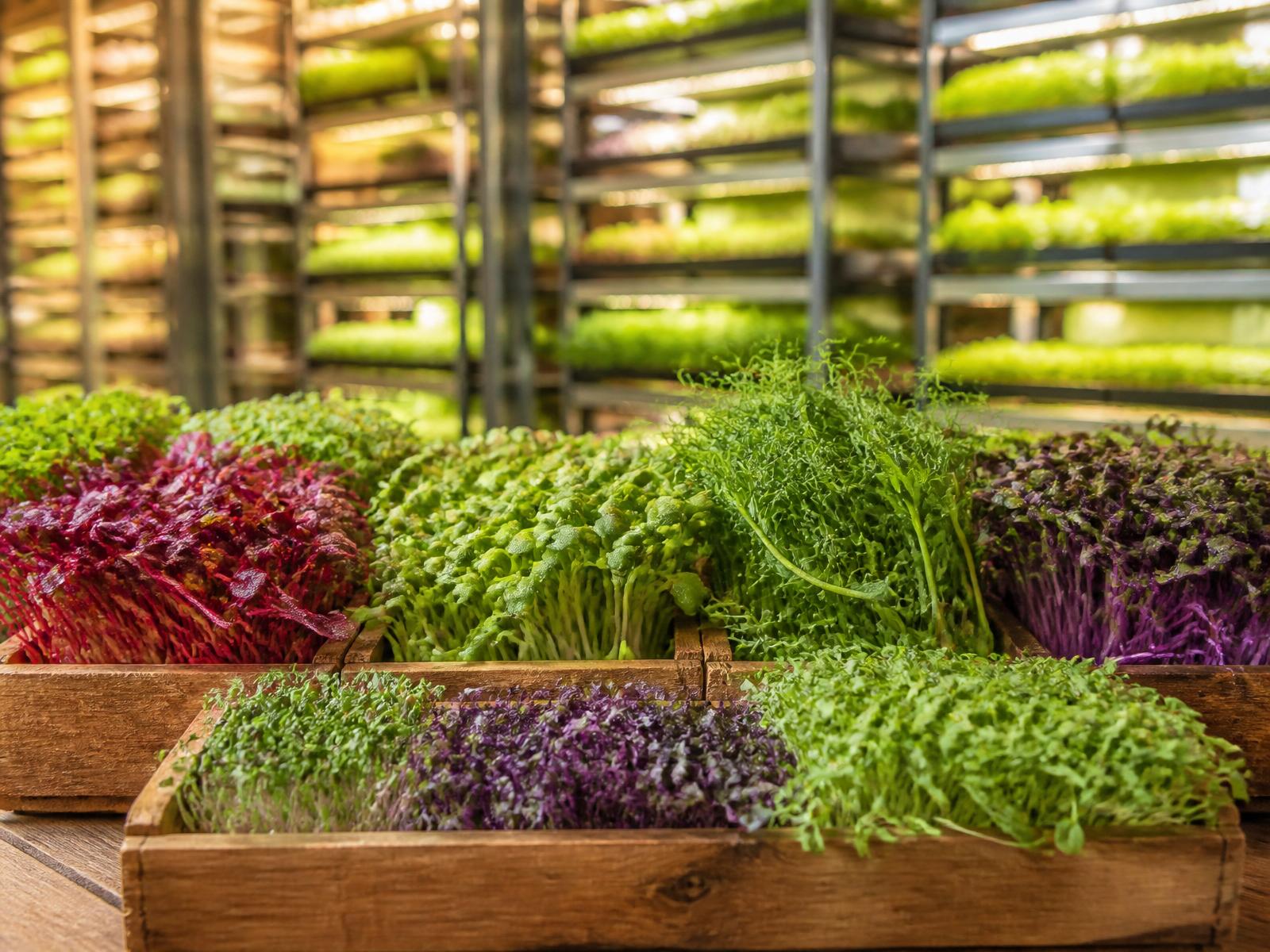
Microgreens are the tender young shoots of edible plants — harvested 7 to 21 days after germination, once the first true leaves appear. Bigger than a sprout, smaller than a baby lettuce, and far more concentrated in flavour than either.
Every microgreen is grown from a specific seed variety: beetroot shoots taste earthy and mildly sweet, radish greens bring a peppery bite, mustard adds a sharp wasabi-like heat, pea shoots are sweet and tender, and broccoli microgreens carry a mild, nutty flavour.
Daily intake
How much is a daily handful?
For general health, the suggested daily portion is 15–40 g — roughly 1 to 2 loosely packed cups, or a small handful. Because microgreens can carry up to 40× more nutrients by weight than mature vegetables, even a small serving delivers a real nutritional punch.
Daily handful
- Kids (3–10)5 – 15 gper day
- Teens & Adults25 – 40 gper day
- New to microgreensStart ~5 gbuild up slowly
Rotate 2–3 varieties across the week for a broader spread of vitamins, minerals and antioxidants.
Start slow if you're new. Microgreens are rich in raw fibre — begin with a small garnish and let your gut adjust over a week before scaling up.
Rotate what you eat. Beetroot, radish, mustard and broccoli each bring a different set of vitamins and phyto-nutrients; swapping across the week gives you a wider spectrum than sticking to one variety.
Why they matter
Small leaves, real nutrition.
Published research repeatedly finds microgreens contain significantly higher concentrations of vitamins, minerals and polyphenols than their mature counterparts — sometimes 4–40× more, depending on the nutrient and variety.
They're eaten raw, so nothing is cooked out. A daily 15–20 g garnish adds meaningful vitamin K, vitamin C, carotenoids and antioxidants without changing what you already cook.
How to eat them
A place at every Indian meal.
- On dal & sabzi: a pinch on the plate right before eating adds crunch and vitamin C without diluting masala.
- In chaats and raitas: radish or beetroot microgreens replace raw onion for a lighter, colourful bite.
- Toast, paratha, sandwich: pea shoots turn a butter toast into a proper breakfast.
- Smoothies: a handful of broccoli microgreens blends into any fruit smoothie without a strong taste.
- Salads & grain bowls: mix varieties — sweet beetroot, spicy radish, nutty broccoli — instead of buying pre-washed leaves.
Storage
Keep them alive in the fridge.
- Store in the coldest part of the fridge (usually the back), not the crisper drawer.
- Keep them dry — moisture is the enemy. If your box has condensation, tuck a folded paper towel inside.
- Most of our microgreens stay crisp for 5–7 days in their original box. Cut leaves last 2–3 days.
- Never wash until you're ready to eat — washing shortens shelf life dramatically.
Safety
Washing & who should be careful.
Rinse in cool water and pat dry just before eating. Because microgreens grow in a controlled, indoor environment they carry a much lower contamination risk than field-grown sprouts, but a quick rinse is always a good idea.
Anyone immuno-compromised, pregnant, very young, or elderly should ideally eat microgreens lightly wilted (dropped into hot dal or a stir-fry off the heat for 30 seconds) rather than raw — same nutritional benefit, no live-food risk.
Compare
Microgreens vs. sprouts.
They sound similar but are grown differently, eaten differently, and carry very different food-safety profiles. A short side-by-side guide on soil vs. water, nutrient density, and why microgreens are the safer raw option.
Explore the catalog
Each variety, up close.
- Beetroot microgreens
Earthy, mildly sweet, faint mineral finish
Read more →
- Radish microgreens
Bright, peppery, clean bite
Read more →
- Mustard microgreens
Sharp, wasabi-like heat with a fresh green finish
Read more →
- Pea shoots
Sweet, tender, snap-pea green
Read more →
- Broccoli microgreens
Mild, nutty, slightly cabbage-sweet
Read more →
- Sunflower shoots
Nutty, crunchy, fresh-cashew flavour
Read more →
- Kale microgreens
Mild, cabbage-sweet, gentle bite
Read more →
Ready to eat this week?
Order the Sampler Box — freshly harvested microgreens delivered in Gurgaon, First week of September 2026 (planned).
Get my Sampler Box →